
Not All QR Codes Are Equal:
A Guide to QR Codes for Direct Mail
What is a QR Code?
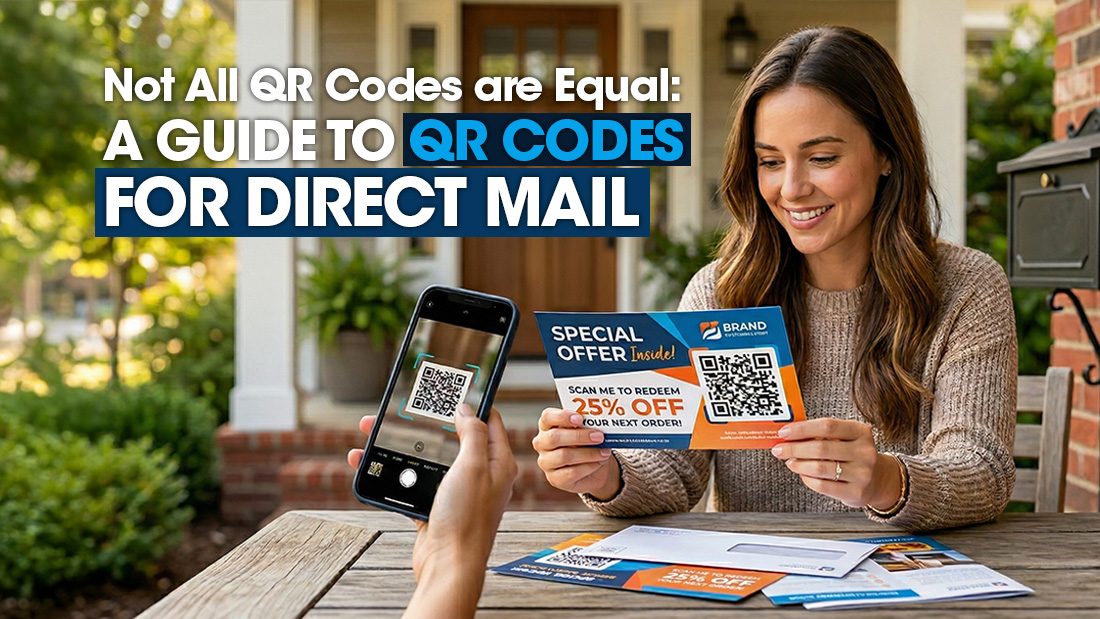
A QR (Quick Response) code is a 2-D barcode that stores information in a grid of black and white squares. When scanned with a smartphone camera, it quickly directs users to digital content such as a website, video, or contact information.
Unlike traditional barcodes, QR codes can store significantly more data and can be read from any angle, making them more flexible for marketing and communication. Today, QR codes have evolved beyond simple, fixed links. Dynamic QR codes allow marketers to update destinations, track engagement, and create more personalized user experiences without changing the printed code. This added flexibility has made QR codes a valuable tool for bridging offline and online channels while providing measurable insights into campaign performance.
URL QR Codes
URL (web link) QR codes are the most widely used and versatile type of QR code, making them the foundation of most marketing applications. At their core, they simply direct users to a web address when scanned—but how that link is structured determines how powerful they can be.
When scanned, a URL QR code instantly opens a webpage, landing page, or digital experience on the user’s device. This bridges the gap between printed and digital marketing materials to an online destination.
Static vs. Dynamic URL QR Codes
Before diving into specific use cases, it’s important to understand the two primary categories of QR codes.
Static URL QR Codes (Static QR Codes)
Static URL QR codes point directly to a fixed web address. Once created, the destination cannot be changed.
Key characteristics:
- Fixed, uneditable destination URL
- No built-in tracking or analytics
- Typically simpler to generate
Common uses:
- Linking to a homepage or contact page
- Product packaging with evergreen information
- Instructional or reference materials
Tracking and measurement:
Static QR codes do not offer native tracking. Any measurement must come from external tools (like website analytics), and traffic may appear as “direct” unless additional parameters are used.
Flexibility:
- Cannot update the destination after printing
- Requires reprinting if the link changes
Dynamic URL QR Codes (Dynamic QR Codes)
Dynamic URL QR codes use a short redirect link, allowing you to update the final destination at any time without changing the printed code.
Key characteristics:
- Editable destination URL after deployment
- Built-in tracking capabilities Often cleaner, less dense code patterns
Common uses:
- Direct mail campaigns linking to targeted landing pages In-store signage promoting offers or product details
- Event materials connecting users to schedules or registration
- Print ads that extend engagement beyond the page
Tracking and measurement:
Dynamic QR codes provide detailed insights into performance. With tracking parameters (such as UTM codes), you can:
- Attribute traffic to specific campaigns
- Differentiate between print and digital sources
- Measure conversions and user behavior
- Analyze engagement by time, location, or device
Flexibility:
- Update destinations without reprinting materials
- Enable A/B testing and campaign optimization
- Support personalized experiences like PURLs for segmented audiences
Types of Dynamic URL QR Codes & Tracking Options
Because dynamic URL QR codes are backed by a web address, there are many different ways to utilize them for marketing purposes. More specifically, they allow for ease of lead tracking and follow-up. Here are just a few ways that dynamic URL QR codes can be used:
Standard URL (Redirect) QR Codes
These are the most common dynamic QR codes. They point to a single URL that redirects those who scan to a URL of your choice. This URL can be changed at any time.
Why use them:
They give you flexibility without adding complexity. If a landing page changes, an offer expires, or you want to swap messaging mid-campaign, you can do it without having to rework materials.
When to use them:
- General marketing campaigns where the destination may change
- Print pieces with longer lifespans (signage, packaging, mailers)
- Situations where you want basic tracking but don’t need personalization
Personalized Tracking QR Codes
Each QR code is unique and tied to an individual recipient, directing them to a personalized landing page or experience.
Why use them:
They create a one-to-one marketing experience. Instead of sending everyone to the same page, you can tailor messaging, offers, and content based on the recipient, which typically improves engagement and conversion rates. They also provide highly specific tracking, allowing you to see exactly who engaged, when they scanned, and how they interacted with the content. This level of insight supports more effective follow-up and deeper performance analysis.
When to use them:
- Direct mail campaigns targeting specific households or customers
- Account-based marketing (B2B outreach)
- Customer retention or re-engagement campaigns
- Any scenario where personalization and individual-level tracking add value
Branded Dynamic QR Codes
Flowcode provides a dynamic, trackable QR solution for clients outside of Mail Plus campaigns.
Key Features:
- Dynamic QR codes with editable URLs after printing
- Scan tracking for total and unique scans
- Hosted and managed externally for easy deployment
Details:
- $25 per year
- Tracks activity via the SMC Dashboard
- PDF reports available upon request
Ideal For: Clients seeking flexible, branded QR codes with full tracking capabilities without committing to a full Mail Plus campaign.

UTM Tracking QR Codes
These dynamic QR codes are built specifically for measurement, using UTM parameters within the destination URL to capture detailed campaign data in analytics platforms.
Why use them:
They make it possible to accurately attribute offline engagement to specific campaigns, channels, and tactics. By applying UTM parameters such as source, medium, and campaign name, each scan is clearly categorized in analytics instead of being grouped under direct traffic. This provides better visibility into performance, supports more informed decision-making, and allows marketers to compare results across channels and initiatives.
When to use them:
- Multi-channel campaigns where clear attribution is needed
- A/B testing different messaging, formats, or offers
- Performance-driven campaigns with defined KPIs
- Any campaign where measuring ROI and optimizing future efforts is a priority
https://domain.com/summer_sale?utm_source=print&utm_medium=direct_mail&utm_campaign=summer_promotion&utm_id=15478546
Other QR Code Functions
Not all QR codes link to websites. Some can trigger specific actions, giving marketers more ways to engage audiences. Common types include:
- SMS QR codes: Pre-fill a text message to a phone number for lead generation or customer support
- Email QR codes: Open a new email with pre-filled recipient, subject, and message
- Wi-Fi QR codes: Allow instant connection to a network without entering credentials
- File download QR codes: Deliver PDFs, brochures, menus, or other documents
- Payment QR codes: Enable payments, donations, or peer-to-peer transfers
Marketers should know about these options because they allow campaigns to drive direct actions, increase convenience, and create interactive experiences beyond simply visiting a website.
Design Considerations
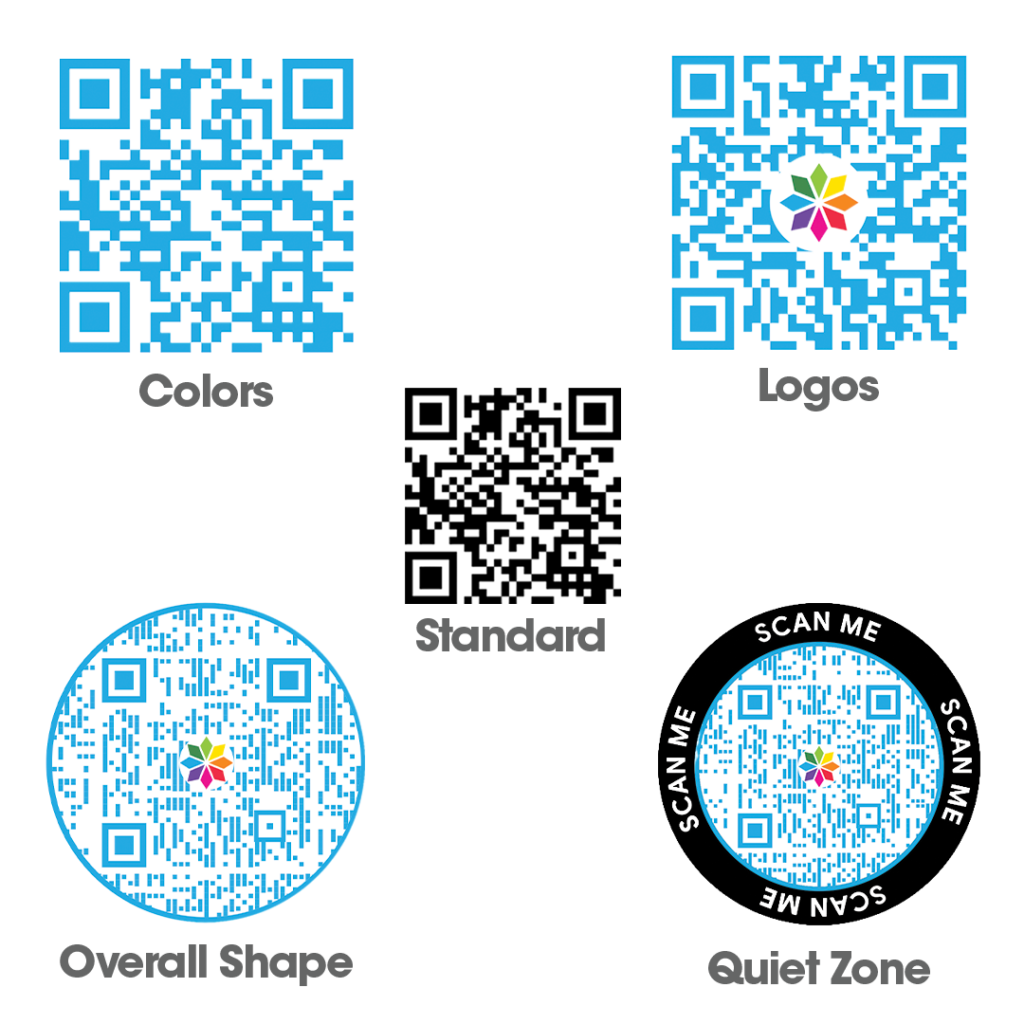
QR Codes are highly customizable, allowing for more brand personalization without sacrificing functionality. Because front-end customization is fully removed from URL structure, brand design can be applied to both static and dynamic QR codes. Customizing the visual elements of a QR code helps it feel like a seamless part of your marketing materials while remaining functional and scannable.
Elements that can be customized include:
- Colors: Both foreground and background colors can be changed to match your brand palette. This allows QR codes to fit naturally with packaging, signage, or marketing collateral while maintaining readability.
- Logos or icons: Logos, icons, or other brand symbols can be placed inside the QR code or near it to reinforce brand recognition. This helps users immediately associate the code with your business.
- Overall shape: Beyond the standard square, QR codes can be modified to have circular, rounded, or uniquely shaped modules while staying scannable, giving a distinctive look that reflects brand personality.
- Quiet zone: The margin around the QR code can be emphasized or styled to improve visibility and make the code stand out within the design of your materials.
QR Code Limitations
- Scanning requirements: QR codes need a device with a camera and a QR scanner. Users with older devices or unfamiliarity may not engage.
- Link reliability: Dynamic QR codes require working redirect URLs, while static codes cannot be updated once printed.
- User perception and trust: Some users hesitate to scan unknown codes, especially considering the potential non-URL functions mentioned earlier.
- Content relevance: The destination should be mobile-friendly, fast-loading, not blocked by interstial pop-ups and content relevancy to maintain engagement.
Conclusion
QR codes provide a unique way to connect physical marketing materials such as direct mail and printed collateral to digital experiences, making campaigns more easily interactive and measurable.
Choosing the right type of QR code, whether static, dynamic, personalized, or conditional, can influence engagement, tracking, and the ability to adapt campaigns over time. Dynamic and personalized codes allow marketers to update content, measure results, and create tailored experiences, while static codes serve as simple and reliable touchpoints.
Design is equally important in driving engagement. Custom colors, logos, shapes, and spacing make QR codes visually appealing, reinforce brand identity, and encourage users to scan. Thoughtful placement and mobile-friendly destinations further ensure that recipients have a smooth experience once they engage.
Despite their versatility, QR codes are not automatic engagment solutions. Their success depends on clear strategy, relevant content, and an understanding of user behavior. When implemented carefully, QR codes can transform direct mail from a static communication into a measurable, interactive, and meaningful marketing tool that bridges offline and online channels.
QR Code Services We Offer:
Non-Trackable QR Codes
Static QR Codes
(Trackable)

Personalized
QR Codes
(Trackable)
Flowcode
Contact one of our industry sales reps today to see what QR codes can do for you.