Digital vs. Offset Printing:
Choosing the Right Technology for the Job
The printing and mailing world has been revolutionized over the past decade. Businesses today have more choices than ever when it comes to producing postcards, brochures, flyers, catalogs, direct-mail pieces, and other marketing materials.
One of the most important choices is the method used to produce the printed piece: digital printing or offset printing.
There is sometimes a tendency to think of digital printing as the modern replacement for offset. That isn’t really the right way to look at it.
Digital and offset printing are both valuable technologies.
The key is understanding what each process does best and using the right technology for the right application.
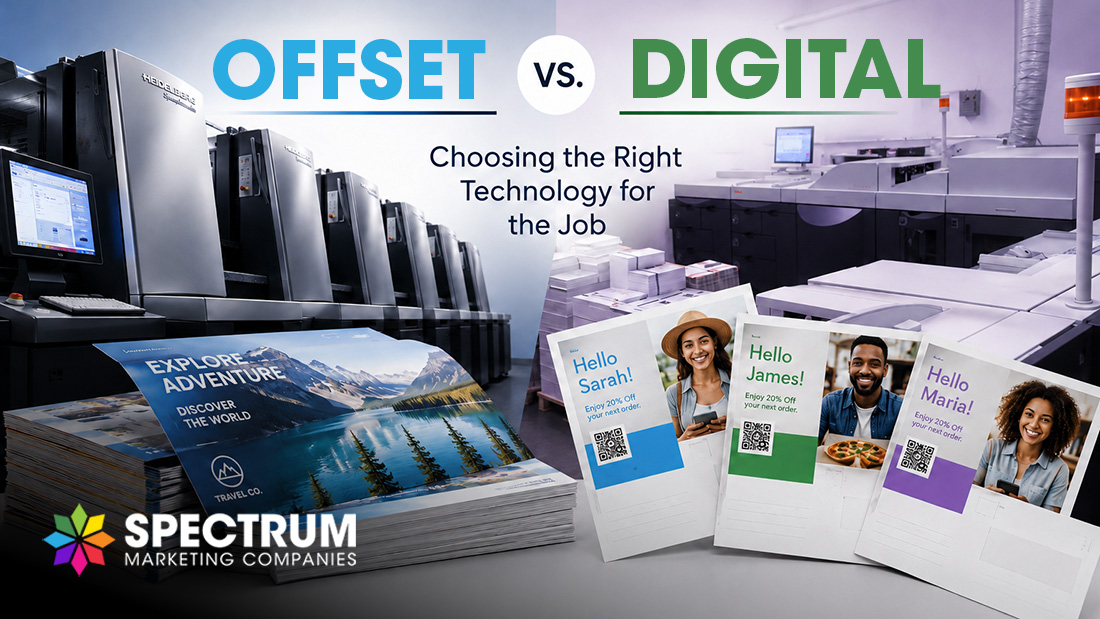
Offset printing remains an excellent choice for larger quantities of high-quality, consistent printed materials. Digital printing offers tremendous value when quantities are smaller, turnaround time is important, or when a campaign benefits from personalization, variable imaging, customized messaging, QR codes, or other forms of variable data.
The goal shouldn’t be to choose digital over offset—or offset over digital.
The goal should be to choose the process that provides the best combination of quality, cost, efficiency, and marketing value for the specific job.
What Is Offset Printing?
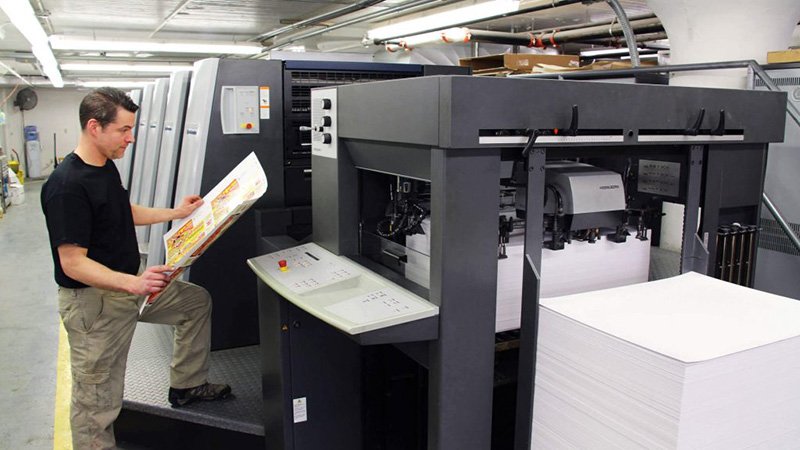
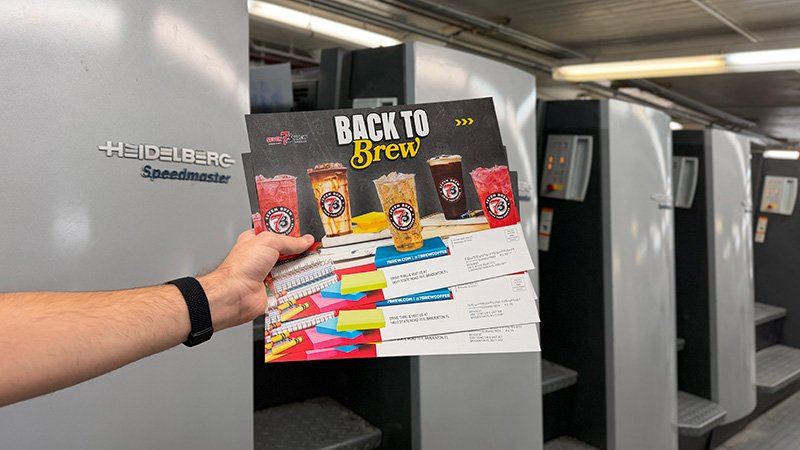
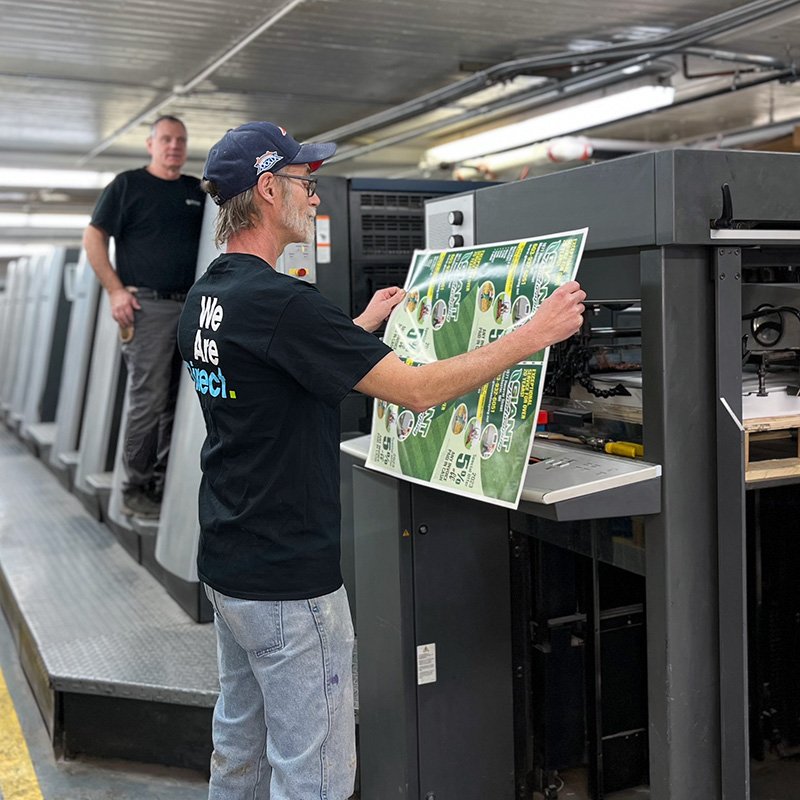
Offset printing is a traditional commercial printing process that has been used successfully for generations. In offset printing, an image is transferred from a printing plate to a rubber blanket and then onto paper. A typical four-color process uses separate plates for cyan, magenta, yellow, and black.
Because the press must be prepared before production begins, offset printing involves setup time and costs. Plates are produced, the press is prepared, inks are loaded, and the equipment is calibrated.
Once that setup is complete, however, offset presses can produce large quantities extremely efficiently. If a company needs 25,000, 50,000, 100,000, or hundreds of thousands of identical pieces, the initial setup costs can be spread across a large number of printed pieces.
The result can be a very competitive cost per piece while maintaining excellent consistency and quality. For large quantities of static print, offset remains a powerful and valuable solution.
What Is Digital Printing?
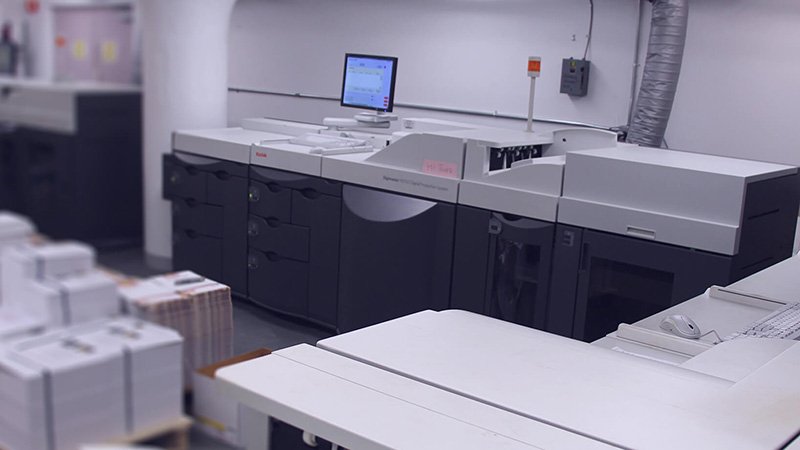
Digital printing takes a different approach. Instead of creating printing plates, the digital press receives the artwork electronically and prints directly from the digital file.
This eliminates many of the setup steps associated with offset printing, making digital printing particularly useful for shorter runs, quick-turnaround projects, and jobs where the content may change from one piece to another.
But perhaps the biggest advantage isn’t simply that digital printing eliminates plates. It’s that every printed piece can be different.
That capability opens up new possibilities for direct mail, allowing businesses to personalize the message, image, offer, or other content for each recipient.
Digital and Offset Can Both Produce High-Quality Work
The conversation about digital versus offset sometimes gets reduced to a question of print quality.
Years ago, there were more noticeable differences between some digital printing technologies and traditional offset printing.
Today, modern commercial digital presses can produce exceptionally high-quality printed materials.
For many postcards, flyers, brochures, and direct-mail pieces, digitally printed materials can have the professional appearance and feel businesses expect from commercial printing.
At the same time, offset printing continues to provide outstanding quality and consistency, particularly for larger production runs. The important point is that quality is not the only consideration. The best printing method depends on the requirements of the project.
When Offset Printing Makes Sense
Offset printing is particularly well suited for larger quantities where the same artwork is being reproduced consistently across the entire run.
For example, imagine a company needs 100,000 identical brochures for a national sales campaign.
- The artwork isn't changing.
- The images aren't changing.
- The offer isn't changing.
- The message is the same for everyone.
This is a classic offset application. The initial setup required for offset printing becomes less significant when it is spread across 100,000 pieces.
The press can efficiently produce the large quantity, and the customer can benefit from an attractive cost per piece.
Offset can also be an excellent choice when a business needs a very large quantity of a static piece and expects to use that inventory over an extended period.
In these situations, offset isn’t simply an old technology. It is the right technology.
When Digital Printing Makes Sense
Digital printing becomes especially valuable when the job requires flexibility.
A project may only require 500, 1,000, 2,500, or 5,000 pieces.
The customer may need those pieces quickly.
The artwork may need to change.
Different versions may be required.
Or, perhaps most importantly, the customer may want to personalize the printed material.
This is where digital printing can provide value that goes far beyond the cost of producing the physical piece.
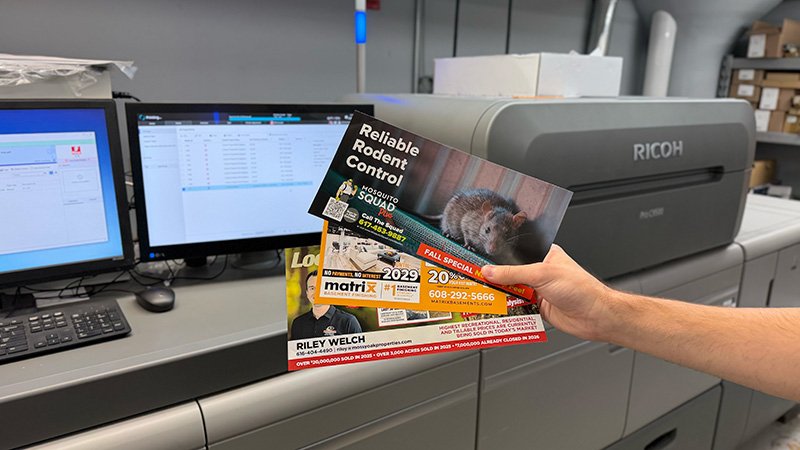
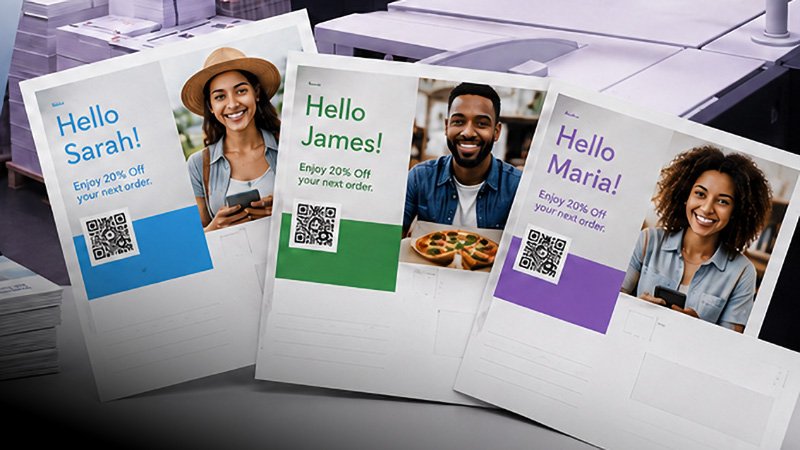
For example, a direct-mail campaign might contain 5,000 postcards—but those 5,000 postcards don’t necessarily need to be identical.
With digital printing, the campaign can use variable data and variable imaging to create a more relevant message for each recipient.
Variable Printing Is Where Digital Really Shines
One of the greatest strengths of digital printing is the ability to incorporate variable information into the printed piece.
That information might include:
- Recipient names
- Different photographs
- Different products
- Personalized offers
- Different headlines
- Geographic information
- Customer-specific messages
- Purchase history
- Personalized QR codes
- Unique URLs
- Different calls to action
This means a business can produce a single mailing containing thousands of individually customized pieces. Instead of treating 5,000 customers as one audience, a company can use its customer data to create a series of messages that are more relevant to different individuals or groups.
This is where digital printing becomes much more than simply a way to produce a postcard. It becomes part of the marketing strategy.
Case Study: Consider a Veterinarian
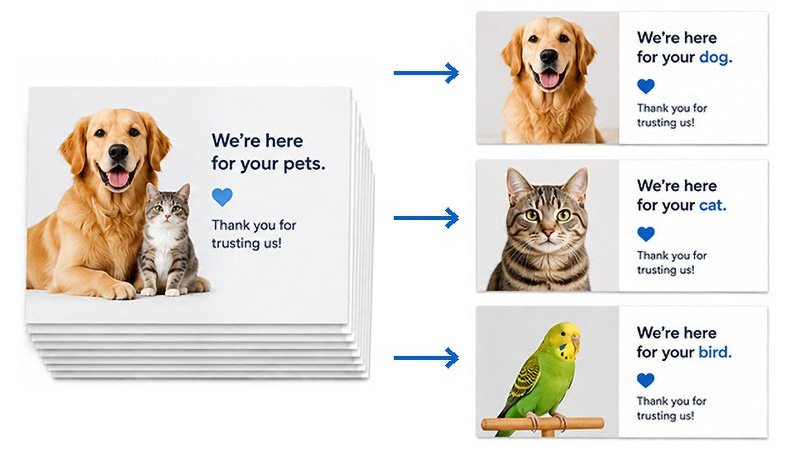
Suppose a veterinarian wants to send a direct-mail campaign to 5,000 pet owners. The practice works with dogs, cats, birds, and other animals. A traditional mailing might use the same postcard—with a generic dog-and-cat image—for all 5,000 recipients.
It works. But digital printing creates another possibility.
What if the practice knows which type of pet each customer owns?
A dog owner could receive a postcard featuring a dog. A cat owner could receive one featuring a cat. A bird owner could receive a bird. Customers with multiple pets could receive a different version altogether.
The mailing still reaches 5,000 people. But the message doesn’t have to be the same for everyone. Each piece can be more relevant to the person receiving it. And relevance is one of the most important ingredients in effective marketing.
Personalization Goes Beyond a Customer's Name
When people hear the word “personalization,” they often think about putting someone’s first name on a postcard.
That’s certainly one form of personalization, but modern digital printing can do much more.
- The photograph can change.
- The headline can change.
- The offer can change.
- The QR code can change.
- The call to action code can change.
The entire message can be customized based on information available about the recipient.
Instead of simply saying: “Dear John, come visit us!” a business can potentially create a message that is much more meaningful to John based on what the business already knows about him. That is the real power of variable printing.
Consider a Local Pizza Shop
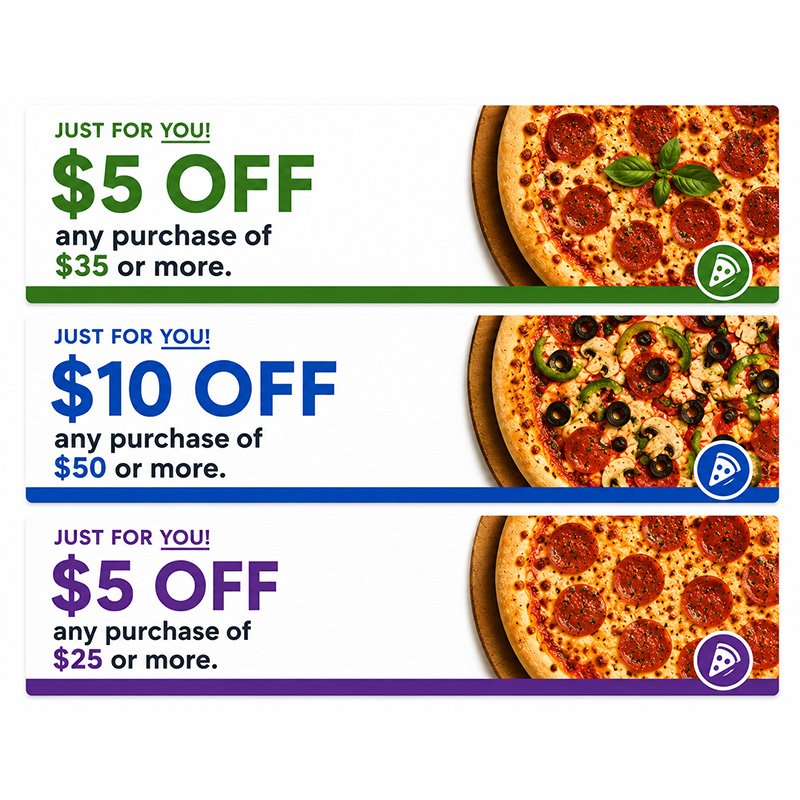
Imagine a pizza shop with a database of regular customers. The business knows approximately how much each customer typically spends.
Suppose one customer has an average purchase of $25. Instead of sending that customer a generic discount, the pizza shop could create an offer designed to increase the average purchase.
For example: $5 OFF any purchase of $35 or more. Why $35? Because the customer’s average purchase is about $25. The offer encourages the customer to spend more while still receiving a meaningful discount.
Another customer might normally spend $40, so they could receive a different offer. A customer who typically spends only $15 could receive another promotion designed to move them toward a $25 purchase. Now imagine doing this for thousands of customers.
The printed piece is no longer simply an advertisement. It becomes a targeted marketing communication based on customer behavior. That is where digital printing can create tremendous value.
QR Codes Add Another Dimension
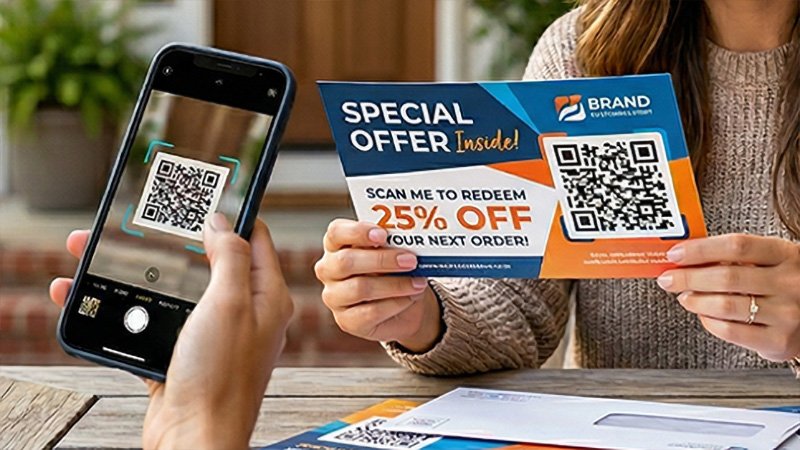
Digital printing can also work hand-in-hand with digital marketing. QR codes can be incorporated into printed pieces and can be customized for different audiences or individual recipients.
A veterinarian could use a QR code to direct customers to an appointment page. A pizza shop could use a QR code to take customers directly to online ordering. A retailer could use a QR code to send customers to a personalized promotion. A service business could use a QR code to schedule an appointment.
The printed piece becomes the bridge between the physical mailbox and the customer’s smartphone. And because the campaign can be designed with different QR codes, businesses can potentially measure which offers, versions, or customer segments generate the strongest response.
Digital Can Reduce Setup and Improve Turnaround
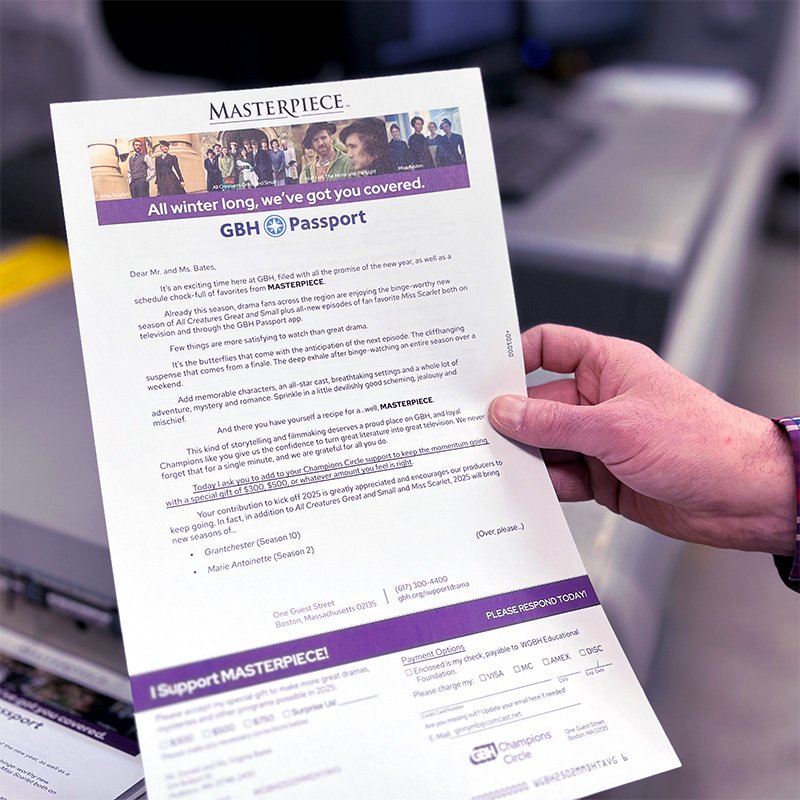
Another advantage of digital printing is efficiency. Because digital printing doesn’t require the same plate-making and press setup associated with traditional offset production, smaller jobs can often move into production quickly.
This can be valuable when a business has a deadline. A seasonal promotion, event announcement, grand opening, limited-time offer, or time-sensitive direct-mail campaign may benefit from a faster production process.
Digital printing can also make it practical to produce smaller quantities and replenish them as needed.
Instead of producing 25,000 pieces because the economics of a traditional print run encourage a larger quantity, a business can produce what it needs now and produce another version later. That flexibility has value.
Offset Can Also Be the More Economical Choice
It is important not to overlook the other side of the equation. Digital printing is not automatically less expensive. In fact, as quantities increase, offset printing can become the more economical option.
Suppose a company needs 100,000 identical postcards. There is no variable messaging. There are no personalized images. Every customer is receiving exactly the same offer.
In this situation, offset printing may provide the better overall value. The cost of setting up the press is spread across a large quantity, making the per-piece economics extremely attractive.
This is why it is important to look at the entire job rather than automatically choosing one technology.
Digital isn’t always better. Offset isn’t always better.
The right answer depends on the application.
The Real Value Is Using the Right Technology
The best printer isn’t necessarily the one that always recommends digital. And it isn’t necessarily the one that always recommends offset. A knowledgeable printing partner should understand both technologies and recommend the process that makes the most sense for the job.
That might mean digital for a 5,000-piece personalized mailing.
It might mean offset for a 100,000-piece static postcard campaign.
It might even mean using both technologies as part of an overall marketing program.
The important thing is matching the technology to the objective.
Digital vs. Offset: Think About the Job, Not the Label
When deciding between digital and offset, consider several factors:
Quantity: How many pieces are needed?
Consistency: Does every piece need to be identical?
Personalization: Does the message, image, offer, or QR code need to change?
Turnaround: How quickly are the finished pieces needed?
Inventory: Will the business need all of the pieces immediately?
Marketing strategy: Would a personalized message potentially improve response?
Budget: Which process provides the best total value for the specific project?
These questions lead to a better decision than simply asking which printing method is cheaper.
Both Technologies Have a Place in Modern Printing
The printing industry has changed dramatically, but that doesn’t mean traditional technologies have become obsolete. Offset printing continues to provide exceptional value for large quantities of consistent, high-quality materials. Digital printing has opened new opportunities for shorter runs, personalization, variable data, rapid turnaround, and targeted direct mail.
Both technologies are valuable. The key is using each where it performs best.
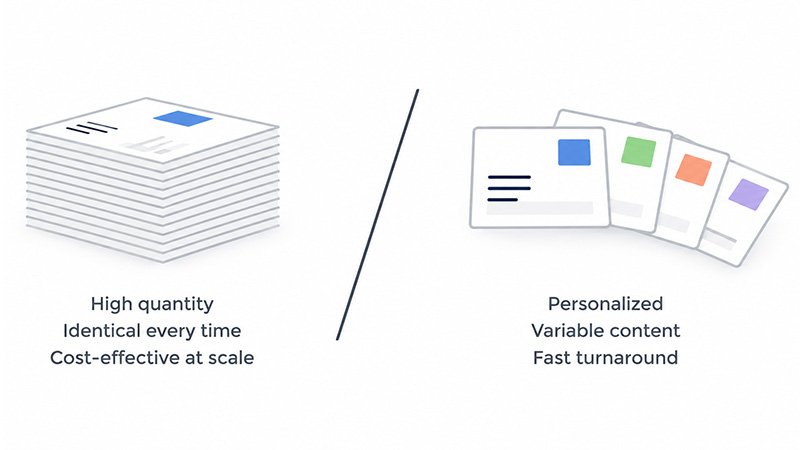
Think of it this way: Offset is about efficiency at scale. Digital is about flexibility and relevance.
Neither is inherently better. They simply solve different problems.
The Future Is About Making Smarter Choices
The most successful printing and mailing programs aren’t necessarily the ones that choose the newest technology. They’re the ones that use data, creativity, production technology, and marketing strategy together.
A business producing 100,000 identical pieces may find tremendous value in offset. A business producing 5,000 highly personalized mailers may find tremendous value in digital. A company running both types of campaigns may benefit from using both.
The goal is not to make every job digital. The goal is not to make every job offset. The goal is to use the right process for the right job.
The Bottom Line
Digital and offset printing are both proven, valuable production methods. Offset printing remains an excellent choice for larger quantities, particularly when the printed pieces are consistent and the economies of scale make a large press run efficient. Digital printing provides tremendous value for smaller quantities and, especially, for campaigns where personalization and variable content can make a difference.
Digital allows a veterinarian to show a dog owner a dog and a cat owner a cat. It allows a pizza shop to create offers based on what individual customers typically spend. It allows businesses to customize images, messages, offers, QR codes, and calls to action.
Offset, meanwhile, can efficiently produce tens or hundreds of thousands of consistent pieces when personalization isn’t necessary.
The real lesson isn’t digital versus offset. It’s digital and offset. When used correctly, both technologies can deliver exceptional quality, efficiency, and value. The smartest approach is to understand what each technology does best and choose accordingly.
For large quantities, offset may provide the best economics.
For variable, personalized, targeted work, digital may provide the greatest marketing value.
And for businesses that understand how to use both, the possibilities are even greater.
In the end, the best printing technology isn’t necessarily the newest one or the cheapest one. It’s the one that best fits the job.